


Registration is Free

Innovative Integration of Machine Learning and Fluid Mechanics for Enhanced Thermal Flow Prediction.
Share
Class Summary
- Gain the ability to articulate the fundamentals of CFD, recognize its limitations, and explain how machine learning is revolutionizing fluid mechanics for thermal flow prediction applications.
- Apply core principles of fluid mechanics, such as the Navier–Stokes equations and conservation laws, to machine learning contexts and analyze flow regimes and boundary conditions.
- Distinguish between data-driven and physics-informed machine learning approaches, describe neural network architectures, and understand model reduction for physical systems.
- Design synthetic datasets for ML-CFD, perform voxelization of geometric data, ensure physical consistency, and apply data augmentation and statistical verification methods.
- Construct and train convolutional neural network encoder–decoder models for CFD, optimize hyperparameters, and implement best practices to avoid overfitting and improve generalization.
- Formulate and apply physics-informed neural networks to fluid mechanics problems, solve forward and inverse tasks, and compare PINNs with CNN-based prediction methods.
- Implement uncertainty quantification using Monte Carlo dropout, assess prediction reliability, and integrate uncertainty into engineering workflows for robust decision-making.
- Validate machine learning models against high-fidelity CFD using error metrics, visualization, and generalization testing, and compare results with classical CFD approaches.
- Integrate ML-CFD into real-time design pipelines, conduct parametric and gradient-based optimization, and leverage computational gains for efficient engineering workflows.
- Analyze and compare hybrid CNN-CFD and classical CFD approaches, evaluating speed, accuracy, scalability, and practical considerations for industry adoption.
- Address turbulence modeling challenges, utilize neural architectures for multiscale flows, and explore future research directions and case studies in ML-CFD.
- Enhance datasets, validate energy conservation, analyze multivariate correlations, and improve interpretability across thermal, seismic, and heat transfer domains.
- Summarize the course methodology, identify future challenges, discuss multi-physics simulation expansion, and evaluate real-world impact and adoption potential.
Subject Area
Geothermal
- Geothermal Energy Technicians
- Geothermal Energy Engineers
- Geothermal Energy Scientists
- Geothermal Project Managers
- Artificial Intelligence (AI)
- For bulk sales, questions, or any inquiries, contact admin at the following address: admin@alzare.com
- Certificates will be issued after successful completion of training.
Duration of Training
Training Venue
Virtual
Class Outline (Table of Content)
-
Day 1 - Thursday Mar 19, 202609:00 AM to 04:00 PMBudapest( 7 hours 0 minutes )
- ML-Fluid Mechanics Integration for Thermal Flow Predication
- Practical assignments, coding, and ML-CFD applications. By the end of this section, learners will understand the fundamentals of CFD, recognize its limitations, and grasp how machine learning enhances fluid and thermal flow predictions. They will be able to apply core fluid mechanics principles, distinguish between data-driven and physics-informed ML approaches, design datasets, implement neural network models, and evaluate predictions for real-world engineering applications.
Cost Per Attendee (USD)
$200
Who Should Attend This Online Class?
-
Engineers and researchers in fluid mechanics or thermal sciences who want to integrate machine learning with traditional CFD techniques.
-
Data scientists and machine learning practitioners interested in applying ML to physical systems, particularly fluid flows and heat transfer problems.
-
Graduate students and academics in mechanical, aerospace, chemical, or civil engineering looking to expand their knowledge of ML-CFD applications.
-
Simulation and CFD professionals aiming to accelerate design workflows, optimize systems, and improve predictive capabilities with data-driven methods.
-
Industry professionals in energy, aerospace, automotive, or process engineering seeking to leverage ML for real-time simulation, uncertainty quantification, and design optimization.
-
Researchers exploring hybrid modeling approaches—combining physics-based simulations with neural networks for enhanced speed, accuracy, and scalability.
-
Anyone interested in advanced modeling techniques for turbulence, multiscale flows, and thermal-fluid systems, including physics-informed machine learning applications.
Why Should You Attend This Online Class?
ML-Fluid Mechanics Integration for Thermal Flow Predication course will learn to integrate machine learning with computational fluid dynamics (CFD) for advanced thermal flow prediction and engineering design optimization. They will cover fundamentals of fluid mechanics, machine learning architectures for physics-based systems, synthetic data generation, physics-informed neural networks, uncertainty quantification, model validation, and real-time design process integration.
Key Learning Areas
-
Introduction to ML-CFD integration, including the motivations and applications in thermal flow prediction.
-
Fundamentals of fluid mechanics relevant to ML models: Navier-Stokes equations, conservation laws, buoyancy, turbulence, and dimensional analysis.
-
Machine learning approaches in physical systems, including neural architectures, physics-informed models, reduced-order modelling, and case studies.
-
Synthetic data generation for ML-CFD: dataset design, voxelization, data augmentation, and physical consistency verification.
-
Training convolutional neural networks (CNNs) for CFD prediction including architectures, loss functions, hyperparameter tuning, and overfitting avoidance.
-
Physics-informed neural networks (PINNs) applied to fluid mechanics problems, challenges, and scaling strategies.
-
Uncertainty quantification methods for reliability assessment and extrapolation handling.
-
Validation of ML models against high-fidelity CFD simulations using error metrics and visualization.
-
Integration of hybrid ML-CFD methods into real-time design and optimization workflows.
-
Comparative analysis of hybrid ML-CFD and classical CFD approaches in terms of speed, accuracy, hardware needs, and industry implications.
-
Advanced topics such as turbulent flow prediction with ML methods and dataset enhancement for multi-physics correlational analysis.
-
Future prospects and practical adoption in engineering research and development.
The course is structured with about 29 lectures totalling around 6 hours, covering both theoretical foundations and practical applications in ML-accelerated CFD design.
Also, please make sure the Udemy course includes a note disclosing the use of Artificial Intelligence in the course description, as required by their guidelines.
Class Preparation
-
Know the basics of fluid mechanics (Navier–Stokes equations, flow, and heat transfer).
-
Understand CFD concepts and turbulence modeling.
-
Have some machine learning knowledge (neural networks, supervised learning).
-
Be comfortable with Python programming and libraries like NumPy or PyTorch.
-
Have access to a computer with enough RAM/GPU for training models.
-
Be ready to code, work with data, and visualize results.
Instructor Details

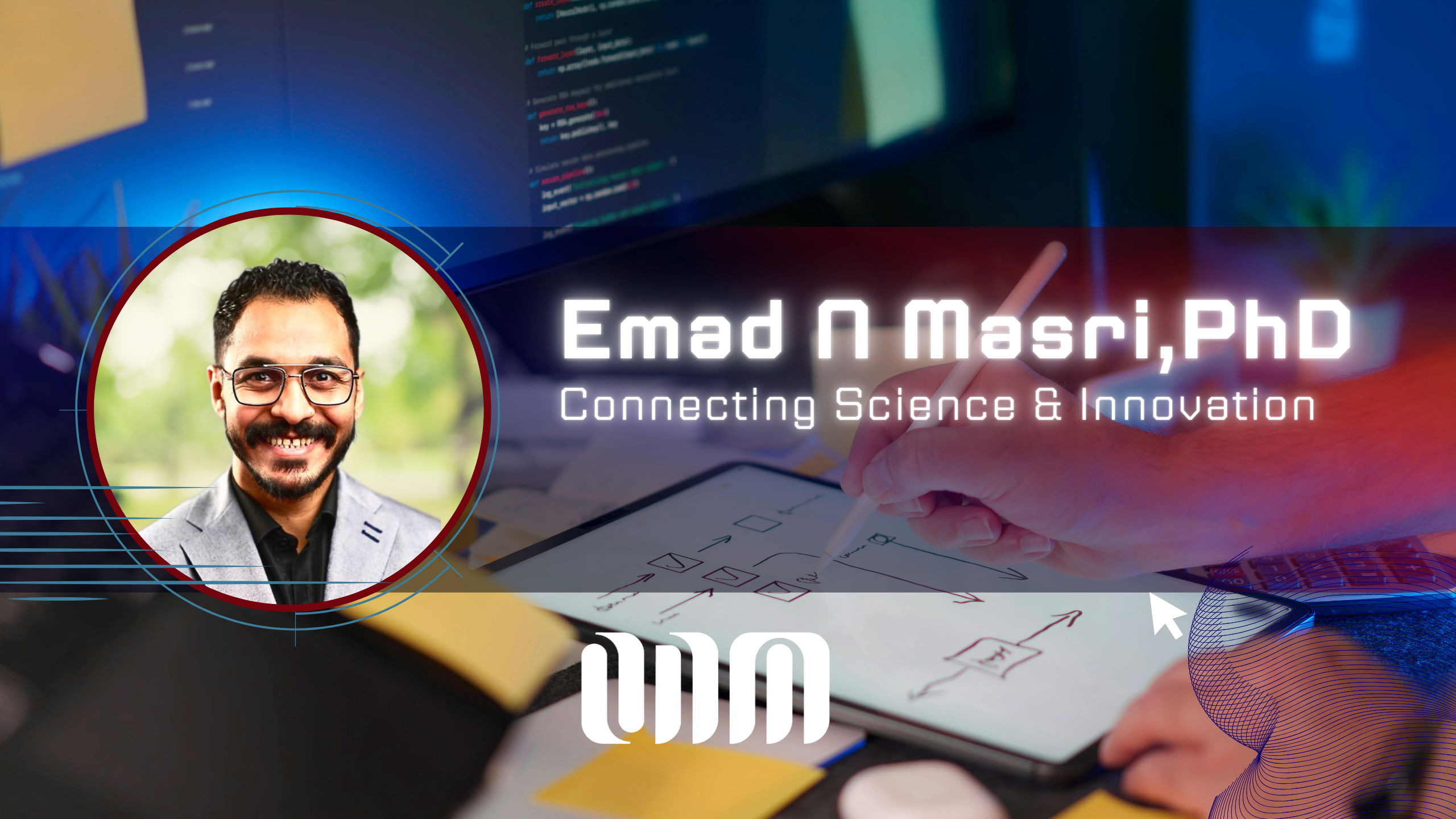
Instructor: Emad N Masri []
Title: Managing Director
Biography of Dr. Emad Nageh Masri Abdelnour
Dr. Masri is an Earth scientist specializing in geothermal exploration and seismic data analysis. He holds a PhD in Natural Science (Earth Science) with a focus on geothermal studies, obtained from the University of Miskolc, Hungary. His doctoral research centered on Amplitude Versus Offset (AVO) inversion and analysis for geothermal reservoir characterization in the Little Hungarian Plain — an innovative approach traditionally used in hydrocarbon exploration but applied by Dr. Masri to geothermal systems.
He earned his MSc in Petroleum Geoengineering from the same university, where he developed expertise in subsurface modeling, seismic interpretation, and reservoir characterization. His MSc thesis, AVO Analysis in the Komadi Concession, Eastern Hungary, demonstrated his analytical skills and innovative thinking in integrating geophysical and geological data for exploration purposes.
Dr. Masri’s academic and research career has been distinguished by his interdisciplinary work bridging geophysics, geothermal energy, and computational modeling. His published papers, “Amplitude Versus Offset Analysis – A Possible Useful Tool for Geothermal Exploration” and “AVO Response Modelling for a Geothermal Reservoir Inside the Carbonate Basement of the Little Hungarian Plain,” are widely recognized for advancing the use of AVO techniques in renewable energy exploration.
Beyond his academic achievements, Dr. Masri has developed solid experience in data-driven modeling and machine learning applications for formation evaluation, as presented in his research on using Python-based machine learning frameworks to improve well log inversion and facies prediction.
He is currently working as a UMS Administrator at Intretech, where he combines his technical and design skills to support operational efficiency. Previously, he gained experience in marketing and sales operations, which enhanced his communication, teamwork, and leadership abilities.
Dr. Masri is the founder of the “Geo-exploration Eye” initiative and the “DrE Workstation” content series, both of which aim to connect geoscience, technology, and global energy challenges. His recent focus includes exploring how machine learning and computational fluid dynamics (CFD) can be integrated for advanced modeling of thermal-fluid systems — a key component in geothermal and energy transition research.
He is known for being collaborative, flexible, and strategically oriented, as reflected in his Equinor professional assessment. His motivation lies in contributing to sustainable energy development, expanding geothermal exploration technologies, and fostering scientific cooperation between Egypt and the global research community.
Outside of his professional pursuits, Dr. Masri enjoys traveling, exploring diverse cultures, hiking, and continuous self-improvement.
Ratings & Reviews
Emad N Masri
No Ratings & Reviews given yet..